
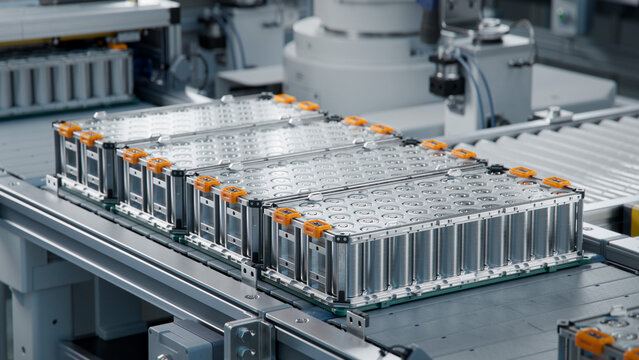
USTC develops “biomimetic cartilage nanocoating” to extend lithium battery life, maintaining high capacity even after thousands of charge-discharge cycles.
Lithium-ion batteries are widely used in smartphones, electric vehicles, and various electronic products. With the increasing global demand for high-energy batteries, high-nickel cathode materials are considered a crucial direction for battery development. A research team led by the Hong Kong University of Science and Technology has recently achieved a major breakthrough in battery energy storage technology. Inspired by human cartilage, they have developed an innovative “biomimetic cartilage nanocoating” that can effectively inhibit the aging and degradation of battery cathode materials from the source. This new technology not only allows batteries to maintain extremely high capacity after thousands of charge-discharge cycles but also opens up new pathways for the industrial application of next-generation high-stability nickel-based lithium batteries, potentially significantly extending the battery life of smartphones and electric vehicles. The research has been published in the top international academic journal *Nature Nanotechnology*.
Source of information: Wenweipo